Water Heater Repair: Troubleshooting No Hot Water
Is your morning routine frozen because there’s no hot water? You twist the tap. Nothing but a bone-chilling rush. If you’re reading this, you need answers fast—maybe even the kind only emergency plumbing brings.
At Down to Earth Plumbing, we know cold showers are more than just unpleasant. They disrupt families, slow down mornings, and can hint at deeper trouble. Let’s walk through what’s happening, how to get your hot water back, and when it’s time to call in professionals who know residential plumbing inside and out.
Why Water Heaters Fail 😬
Water heaters are like the silent workhorses in your home. But even the sturdiest ones trip up sometimes. No hot water? Here are the usual suspects:
- Pilot Light Issues (Gas Heaters): Like a candle blown out by a draft, your heater’s pilot can go out. No flame, no heat.
- Thermostat Failure: If the thermostat’s broken, your heater’s like a driver with a busted speedometer—no idea how hot to get.
- Tripped Breaker (Electric Heaters): Sometimes, the breaker flips. No power, no heat. Simple, but easy to overlook.
- Sediment Build-up: Over time, minerals settle at the bottom, making your heater work twice as hard—or not at all.
- Heating Element Failure: For electric models, a burnt-out element means cold water, every time.
- Ignition Problems (Tankless): Tankless heaters need a reliable spark. No ignition, no warmth.
According to the International Association of Certified Home Inspectors (InterNACHI), most water heaters last 8–12 years with good preventative maintenance near you.
Step-by-Step Troubleshooting by Heater Type
A little detective work can help you spot the problem—fast.
Gas Water Heaters
-
Check the Pilot Light
- Look through the little window near the bottom. No flame? Relight it per the manufacturer’s instructions.
- Smell gas? Stop. Get everyone out, then call for emergency plumbing help.
-
Inspect the Thermostat
- Make sure it’s set between 120–140°F (49–60°C).
- If it clicks but doesn’t spark, it might be faulty.
-
Listen for Strange Noises
- Rumbling or popping? Sediment buildup could be blocking the burner.
-
Check the Gas Supply
- Is the valve open? No gas, no heat.
Electric Water Heaters
-
Check the Breaker
- Head to your breaker box. Flip the water heater breaker off, then on.
- If it trips again, call a professional.
-
Test the Reset Button
- Most heaters have a red reset button on the thermostat panel. Press it and wait.
-
Check for Leaks
- Wet spots mean you might need leak detection or even a replacement.
-
Test the Heating Elements
- If you’re comfortable, use a multimeter. No reading? The element’s likely burnt out.
Tankless Water Heaters
-
Power and Gas Supply
- Make sure the unit is plugged in and breaker is on.
- For gas units, check the supply valve.
-
Error Codes
- Most tankless units have a digital display. Check the code in your manual.
-
Clean the Filter
- A clogged inlet filter can stop water flow and heat.
DIY Safety Precautions
Before you do anything, safety comes first. Every. Single. Time.
- Shut off power at the breaker (electric) or the gas valve (gas).
- Let the unit cool before touching anything.
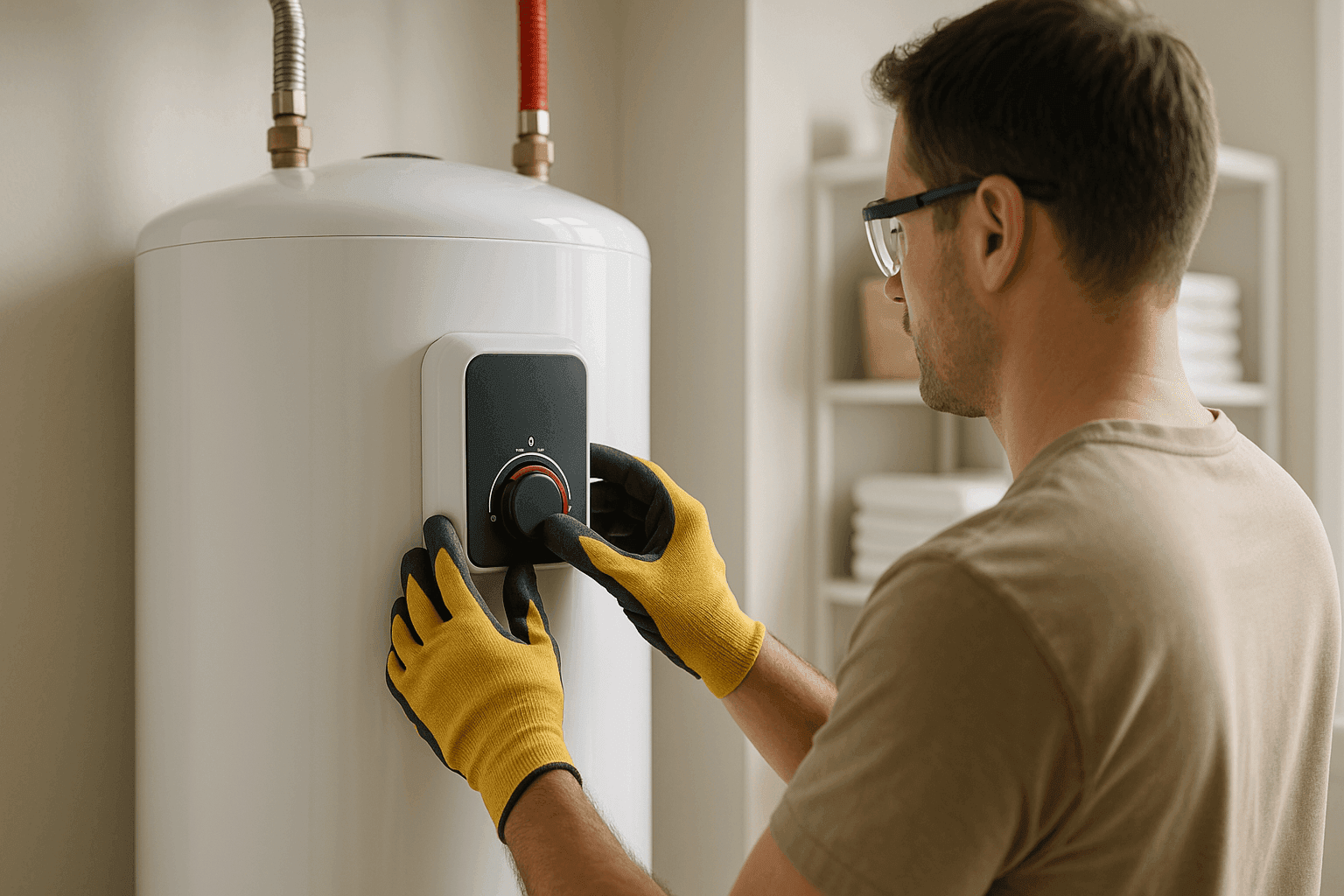
- Wear gloves and eye protection.
- Never attempt repairs if you smell gas—leave and call emergency services right away.
- Avoid opening panels if you’re unsure—water heaters can pack a punch like a coiled spring.
For more on home electrical safety, the National Fire Protection Association (NFPA) is a reliable source.
DIY vs. Call a Pro
Some fixes are as simple as flipping a switch. Others? They can turn sideways quickly.
DIY Might Be Fine If:
- You’re relighting a pilot with clear instructions.
- Resetting a breaker or thermostat.
- Checking the basics (is it plugged in? is the valve open?).
Call Down to Earth Plumbing If:
- You see leaks or rust.
- The breaker keeps tripping.
- There’s a rotten egg smell (gas leak).
- You have no hot water after basic checks.
- You hear loud banging or see scorch marks.
Remember, water heaters are pressurized and run on gas or electricity. When in doubt, play it safe.
What Pros Do On Arrival
Here’s what to expect when a Down to Earth Plumbing technician shows up:
- Inspection: We’ll check all connections, valves, and components.
- Testing: Specialized tools help us check thermostats, elements, and gas pressure.
- Flushing: If sediment’s the culprit, we’ll flush the tank safely.
- Repairs: From replacing elements to fixing gas controls, we handle it all.
- Safety Checks: We inspect for code compliance, backflow risks, and gas safety.
We follow standards set by the Uniform Plumbing Code (UPC) and local guidelines, so your system is safe and up to code.
Prevention & Maintenance Tips 🛠️
Keep your water heater running longer with these simple steps:
- Flush the Tank Yearly: Draining sediment keeps things humming.
- Set Thermostat to 120°F: Saves energy and prevents scalding.
- Check Anode Rods: Replace every 2–4 years to prevent rust.
- Insulate Pipes: Keeps water hotter, longer—especially in winter.
- Schedule Preventative Maintenance Near You: Annual checks catch small issues before they become big headaches.
Want to save on energy bills? The U.S. Department of Energy recommends lowering the thermostat and insulating your tank for better efficiency.
Costs & Time Factors
Water heater repairs range from a quick reset to replacing major parts. Here’s what affects cost and timing:
- Type of Heater: Gas, electric, or tankless repairs differ in complexity.
- Part Needed: Elements and thermostats are usually quick fixes. Major leaks or gas valve replacements take longer.
- Age of Unit: Older heaters may need more extensive work—or replacement.
- Warranty Status: Check your paperwork! Many tanks come with 6–12 year warranties. DIY repairs can sometimes void these, so read the fine print.
Most simple repairs take 1–2 hours. Complex jobs (like repiping or full replacements) may stretch to half a day.
When It’s an Emergency
Not all cold showers are created equal. Here’s when you need emergency plumbing, day or night:
- Major Leaks: Water pooling around your heater can cause serious damage.
- No Hot Water for Critical Needs: Especially with infants, elderly, or medical conditions.
- Unusual Noises or Smells: Banging, popping, or gas odors need fast attention.
- Water Pressure Drops: Could signal a bigger system problem.
- Visible Rust or Corrosion: A ticking time bomb for leaks.
FAQ
Why does my water heater run out of hot water so quickly?
Sediment build-up or a faulty thermostat could be the culprit. Sometimes, your tank is just too small for your needs.
Can I repair my water heater myself?
You can handle simple checks like relighting a pilot or flipping a breaker. Most repairs—especially anything involving gas or electrical wiring—should be done by a licensed plumber.
How often should I flush my water heater?
Once a year is best, according to most manufacturers and the U.S. Department of Energy.
Is it normal for my water heater to make noise?
Some noise is normal, but loud banging or popping can mean sediment build-up or a failing part.
Local & Seasonal Considerations 🏠
Cold snaps and seasonal changes can stress your heater. In winter, pipes contract and heaters work harder. Insulate exposed pipes and schedule a pre-winter checkup to avoid surprises.
If you live in an area with hard water, mineral build-up is more common—flush that tank regularly. And always keep an eye out after storms or power outages, as they can trip breakers or pilot lights.
When hot water runs cold, don’t let stress take over. Down to Earth Plumbing is here for all your emergency plumbing needs—including preventative maintenance near you.
Call Down to Earth Plumbing now — or reach us anytime at 888-488-8509 .